
Stronger local governance improves water access and stability in Greater Kapoeta, South Sudan
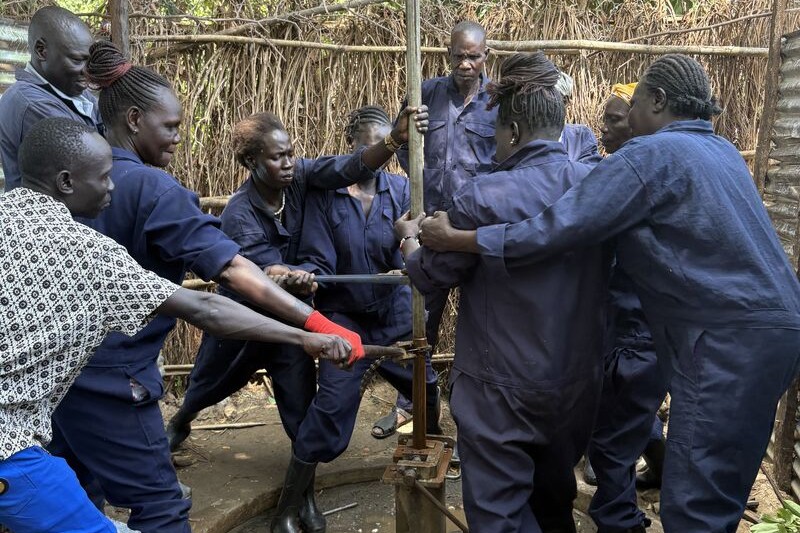
Communities in Greater Kapoeta, South Sudan, now have far more reliable access to water than 8 years ago. Water points that were once operational only 20% of the time now function up to 90% of the time, while repair times have fallen from months to just 1 or 2 days. The improvement is the result of stronger local governance, better coordination and greater community ownership.
These results are significant in a region where years of conflict have weakened public services, including water, sanitation and hygiene (WASH), and increased pressure on scarce water resources. Limited access to water had also contributed to tensions between domestic and agricultural users. To address these challenges, VNG International drew on more than 20 years of experience working in South Sudan. Through the Sustainable Development for Improved Local Governance (SDLG) programme, we support local governments and communities in Kapoeta North, Kapoeta South, Kapoeta East and Torit counties in improving water governance, strengthening service delivery and reducing water-related conflicts through inclusive and non-violent approaches.
Strengthening governance structures at every level
The progress has been achieved by strengthening governance structures at every level, improving coordination between them and enhancing women participation. This has led to:
- Community-based Water Management Committees that report breakdowns quickly and collect water user fees transparently. These funds are used to pay local pump mechanics and improve water infrastructure.
- Payam WASH Forums (a local administrative level between community and county government) that coordinate maintenance services, monitor quality standards and help ensure fair and affordable pricing.
- Stronger county authorities and a more active Local Government Board, providing oversight, coordination and support across the water sector.
- Greater participation of women through Women in WASH Groups and the Women in Local Government Association, ensuring women’s voices are represented in decision-making, planning and implementation.
From local practice to national policy
The approach is now informing national policy processes. The SDLG Programme has supported the Eastern Equatoria State Ministry of Housing, Land, and Public Utilities in developing WASH sector coordination guidelines, bringing together state stakeholders and partners to clarify roles and responsibilities and strengthen coordination across the sector.
Moreover, the programme works closely with the Ministry of Water Resources and Irrigation to support the review of water policies drawing on lessons from the SDLG programme, contributing to ongoing revisions of the national water policy and the development of a new water bill. The programme’s activities at local-level therefore form an important foundation for national-level support, leading to a strengthened link between local governance and national decision- and policymaking.
Strong potential for scaling across other regions of South Sudan
During a recent visit to Juba and Greater Kapoeta, the progress and achievements to date were witnessed by a delegation from the Embassy of the Kingdom of the Netherlands and VNG International. The continued support from the Ministry of Foreign Affairs of the Netherlands and the Embassy of the Kingdom of the Netherlands in Juba has been essential in making these results possible. Building on this progress, the multi-level governance approach to the WASH sector offers strong potential for scaling across other regions of South Sudan.