Water for Kherson: immediate damage reconstruction and sustainable solutions
The project focused on the sustainable restoration of access to drinking water and sanitation in heavily war-affected communities and on the development of an Integrated water resources management vision (pdf, 17 MB).
Project objective
The project contributed to the short-term and longer-term sustainable reconstruction of water supply and sanitation facilities in southern Ukraine. As a short-term solution, the project focused on reconstructing water supply and sewerage systems using energy-efficient solutions where possible. At the same time, as a longer-term sustainable solution, it supported the selected region in developing a medium-term IWRM vision that connects local water systems with regional and national water systems.
Project approach
The nearly two-year project was designed in response to requests from partners in the region, including territorial communities, Ukrainian water utilities (vodokanals) and the regional government. When selecting technical reconstruction projects, we aimed to ensure that they help provide adequate and sustainable drinking water supplies and wastewater treatment services to the targeted communities. The development of the Integrated Water Resources Management (IWRM) vision took into account the damage caused by the full-scale invasion, including the destruction of the Kakhovka Dam. It also considered the efficiency gains that can be achieved through cooperation between local and regional authorities.
Work packages
The project consisted of three work packages:
Work package 1: Restoration of infrastructure
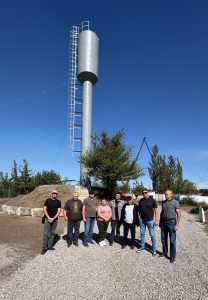
Infrastructure investments (both drinking water and sewerage/treatment) were made in accordance with the Building Back Better and Green principles in areas that have been heavily affected by war and were relatively safe to work in: Vysokopillia, Novovorontsovska, Kherson and Chornobaivka. Reconstruction was carried out in close cooperation with the vodokanals, territorial communities and Kherson Oblast. The reconstruction improved reliable water supply and backup power for approximately 7750 households (serving between 9,151 and 27,597 residents), while ensuring reliable access to essential infrastructure, including schools, kindergartens, hospitals, municipal utilities, emergency services, postal facilities, administrative building, and local businesses.
Work package 2: Technical assistance
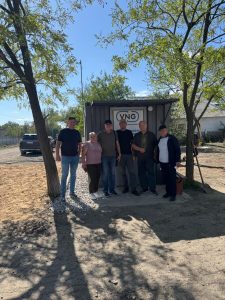
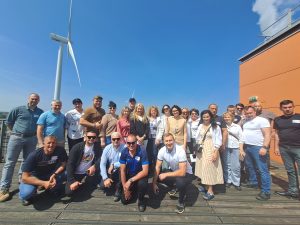
At the regional level, technical assistance was provided to the vodokanals, or municipal water and wastewater companies, and territorial communities at a safe location in the Kherson region. Technical assistance took place in the form of online and offline trainings, on-the-job coaching, study visits on topics such as maintenance, non-revenue water reduction, (waste) water treatment, water quality, energy efficiency, cost recovery, water tariff setting, procurement and water governance. (This increased the capacity of representatives of water utilities and relevant departments of local authorities to maintain (technically) and sustain (financially) water and sewerage systems.
Work package 3: Regional strategy
For Kherson oblast, a regional integrated water resources management (IWRM) vision was developed that connected the local water system to the regional / national water system. The IWRM vision for Kherson Oblast was based on the basin management principle and was aligned with Ukraine’s European integration commitments, key EU water directives and the objectives of UN Sustainable Development Goal 6 on clean water and sanitation. The Vision defines clear strategic priorities and a phased investment perspective to support sustainable water supply, ecosystem restoration and economic recovery. It serves as a common reference framework for public authorities, communities and other stakeholders up to 2030 and 2050.
Results
Restoration of infrastructure
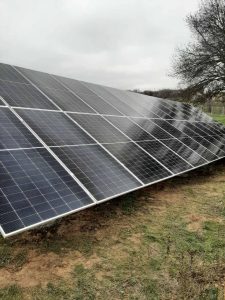
- Reconstruction of the water and sewerage infrastructure, including installation of Solar power plants (SPPs) to provide continuous and uninterrupted water supply to the population of 4 war-affected communities of Kherson region. The reconstruction improved reliable water supply and backup power for approximately;
- In Chornobaivka: 2,000 households (serving between 3,500 and 7,170 residents) and ensured service provision to key social and public facilities;
- In Novovorontosvka: 1,500 households (serving between 3,500 and 6,027 residents) and ensured continued access to water for key social infrastructure, including a lyceum, two kindergartens, the central district hospital, the village council, the fire and rescue unit and local businesses;
- In Vysokopillia: for between 176 and 1,250 households (serving 426 to 3,500 residents) and secured access to safe water and backup power for essential local facilities, including a school-nursery, administrative building, first-aid/obstetrical station and water purification station;
- In Kherson: for between 475 and 3,000 households (serving 1,725 to 10,900 residents), while ensuring reliable access to essential infrastructure, including schools, kindergartens, hospitals, municipal utilities, emergency services and postal facilities.
Technical assistance
The increasing the capacity of representatives of water utilities and relevant departments of local authorities to maintain (technically) and sustain (financially) water and sewerage systems. Online and offline trainings and study visits covered topics such as asset criticality analysis, EPANET hydraulic modeling, non-revenue water reduction, asset management, contract/tender/project management, Ukrainian procurement and tariff setting procedures, water quality sampling and monitoring, groundwater treatment including reverse osmosis, water safety plans with climate resilience adaptation, borehole management and pump design, water governance, integrated water/land resource management under war and climate impacts in Kherson communities and solar power plant development/operation.
Regional strategy
We developed the Integrated water resources management vision in Kherson region (pdf, 17 MB) based on the basin management principle and aligned it with Ukraine’s European integration commitments, key EU water directives and the objectives of UN Sustainable Development Goal 6 on clean water and sanitation. The Vision defines clear strategic priorities and a phased investment perspective to support sustainable water supply, ecosystem restoration and economic recovery. It serves as a common reference framework for public authorities, communities and other stakeholders up to 2030 and 2050.