
Residents and service providers work together for better services in refugee camps
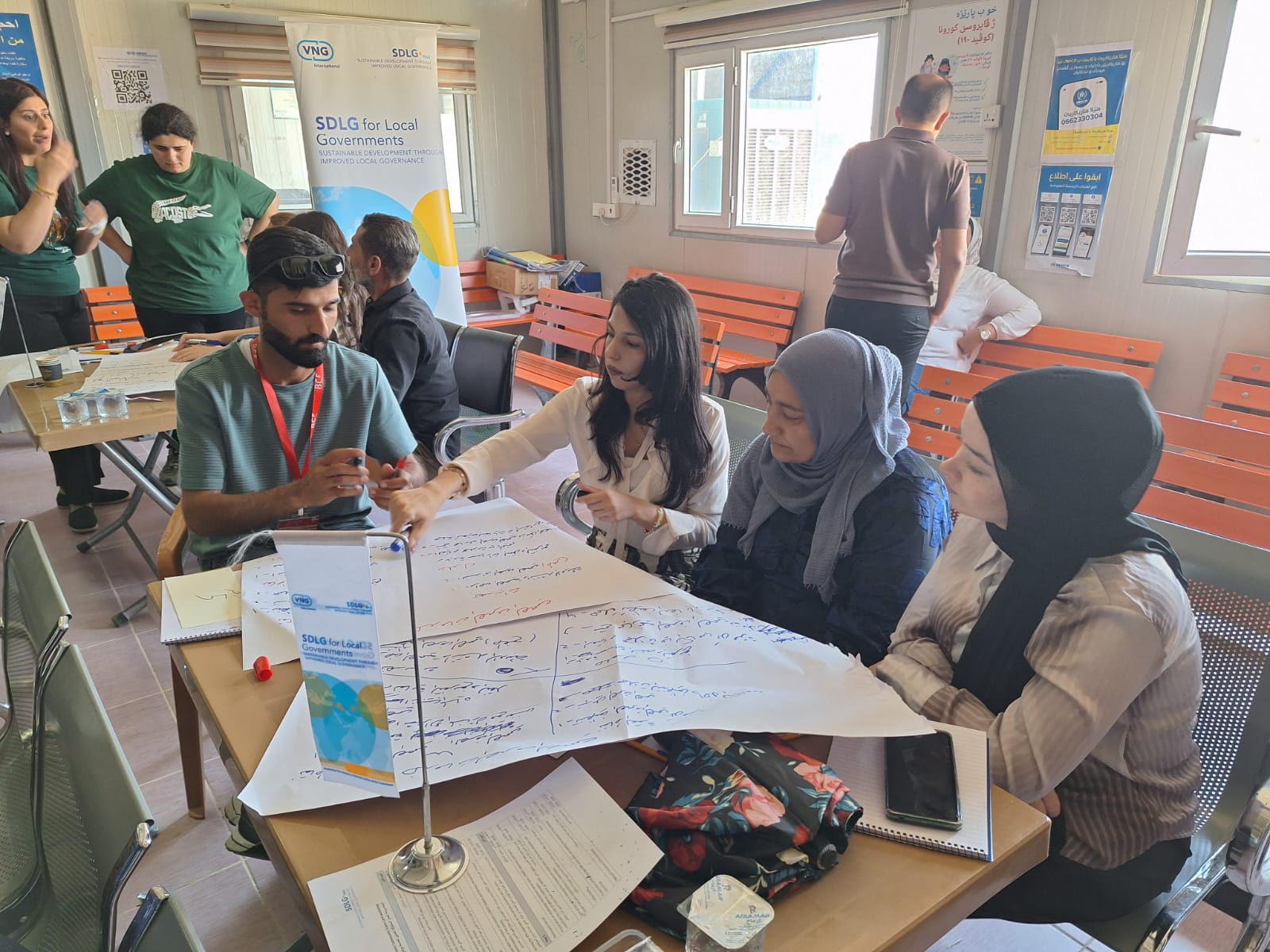
Camp residents, service providers and local authorities are working together to improve water, sanitation and waste services in refugee camps in northern Iraq. Through the Community Score Card approach, they identified service gaps, agreed on priorities and developed action plans. New camp committees will ensure continued follow-up and accountability.
Listening to residents’ experiences in the camps
For many Syrian refugees in Duhok Governorate, camps such as Domiz 1 and Gawilan have been home for years. What began as temporary shelter has become a long-term home where families raise children, build routines and try to look ahead while living with the effects of displacement and uncertainty about the future. In communities where so many people live closely together, reliable basic services matter deeply. People need to be able to count on clean water, safe sanitation and regular waste collection. When these services do not work properly, the consequences are felt quickly in people’s health, safety and dignity.
Residents are often the first to see where problems arise. They know which areas flood after rain, where waste accumulates and when water supply becomes unreliable. The challenge is to ensure that this everyday knowledge reaches the people responsible for delivering and improving these services.
Using the Community Score Card to identify service gaps
To help make that connection, VNG International Iraq introduced the Community Score Card approach in Domiz 1 and Gawilan. The approach brings camp residents and service providers together to look closely at how services are working, where they fall short and what can be improved. Eleven local facilitators from government institutions, service providers, camp management authorities and academic institutions were trained to guide these conversations. They then led workshops in both camps, bringing refugees together with those responsible for water, sanitation and solid waste services.
The discussions were supported by survey data from more than 400 refugees and host community members living in the camps and surrounding communities. This helped turn individual experiences into a clearer picture of the issues affecting people across the area. Residents could explain the problems they encounter in daily life, while service providers could share the practical challenges they face in responding to them.
Together, participants identified priorities and developed action plans to improve public services in both camps. The process also created space for a more direct and honest conversation between the people using these services and the people responsible for providing them.
Camp committees ensure follow-up and accountability
To keep that conversation going, a six-member committee has been established in each camp. Each committee includes two representatives from camp management and four refugee representatives. They will follow progress on the agreed actions, raise new concerns and help ensure that residents continue to have a voice in decisions that affect their daily lives.
The activities are part of the Sustainable Development through Improved Local Governance (SDLG) programme, financed by the Dutch Ministry of Foreign Affairs.